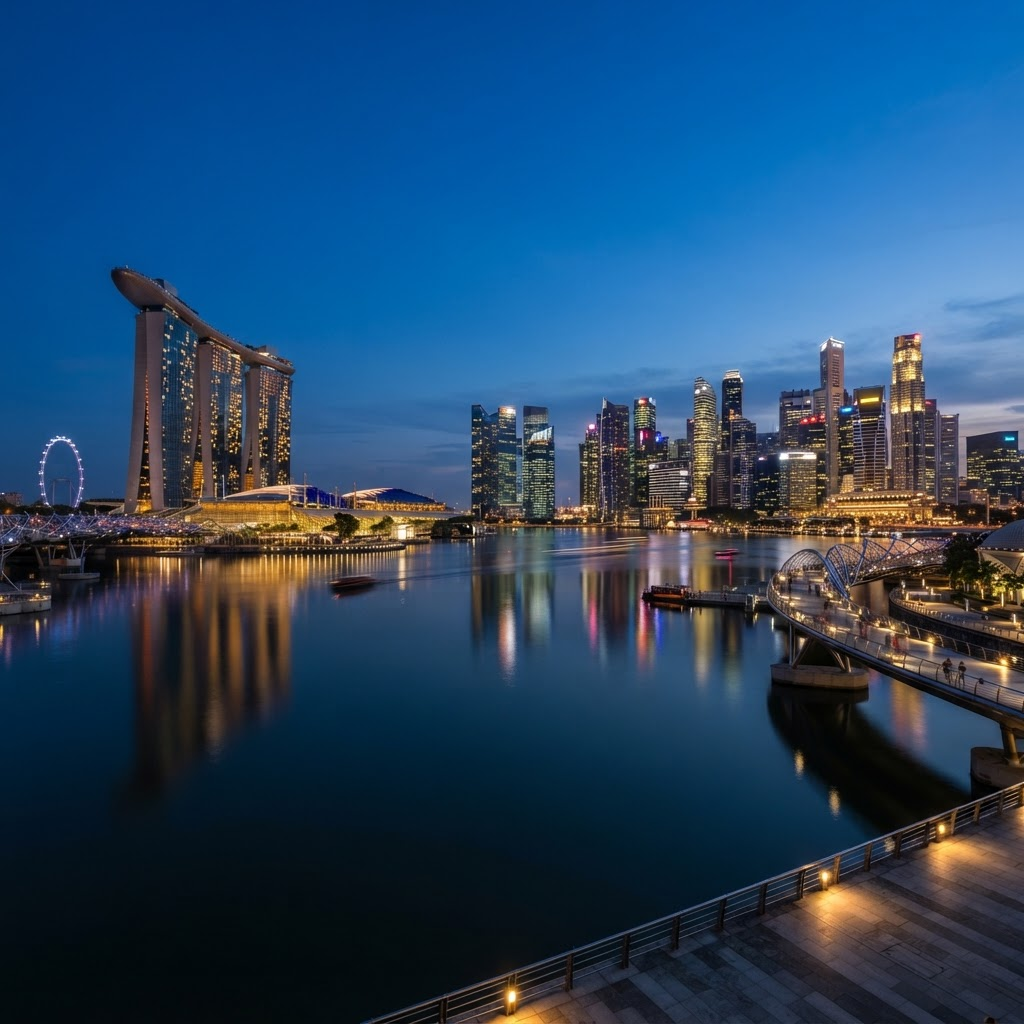
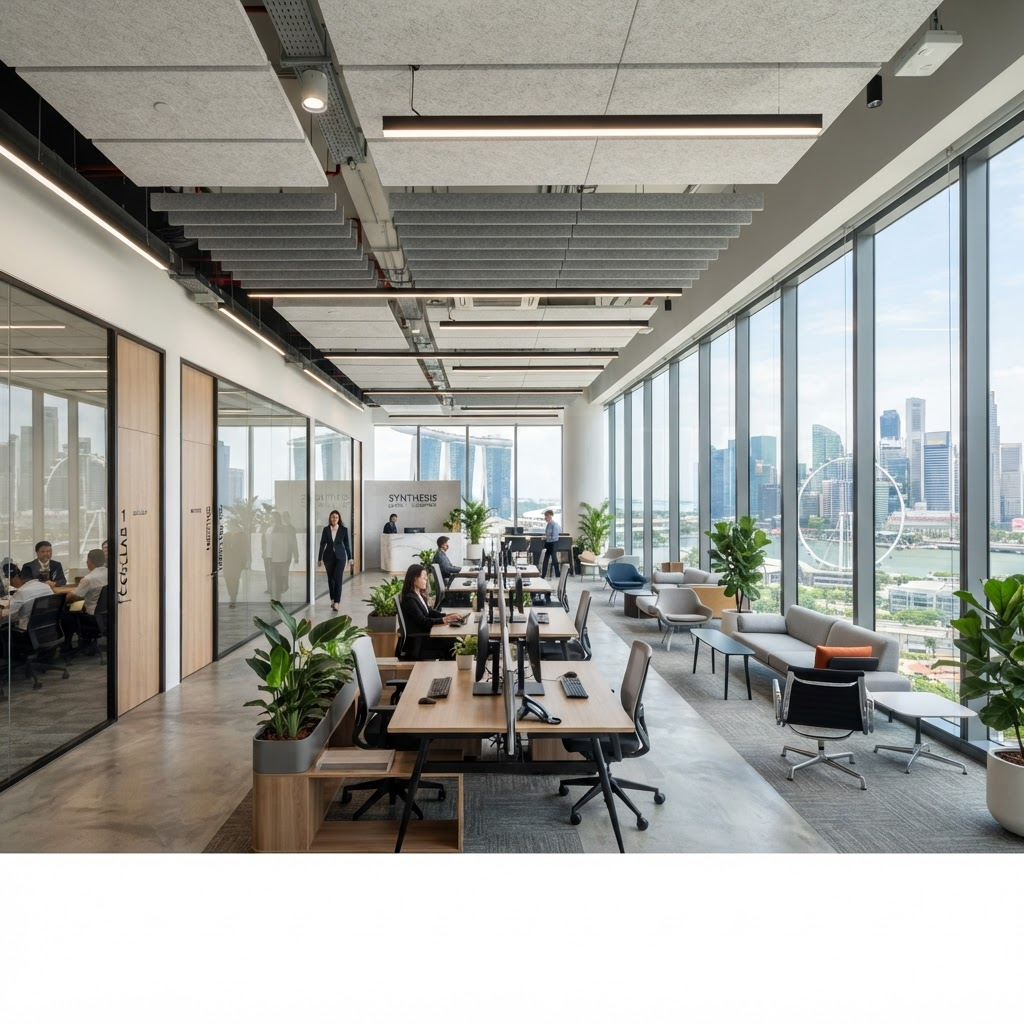
Modern commercial office space

Commercial Property

Commercial Property Solutions Built Around Your Business or Investment Requirements

From finding operational premises to acquiring an investment asset, we coordinate commercial-property requirements across Singapore's office, industrial, logistics, retail and shophouse markets.

Property Categories

Modern commercial office interior

Strata Offices

Strata offices may appeal to owner-occupiers, businesses seeking long-term premises and investors seeking individually titled commercial units.

Our review considers location, accessibility, tenure, building condition, unit configuration, common facilities, parking, surrounding amenities, occupier demand and future resale or leasing considerations.
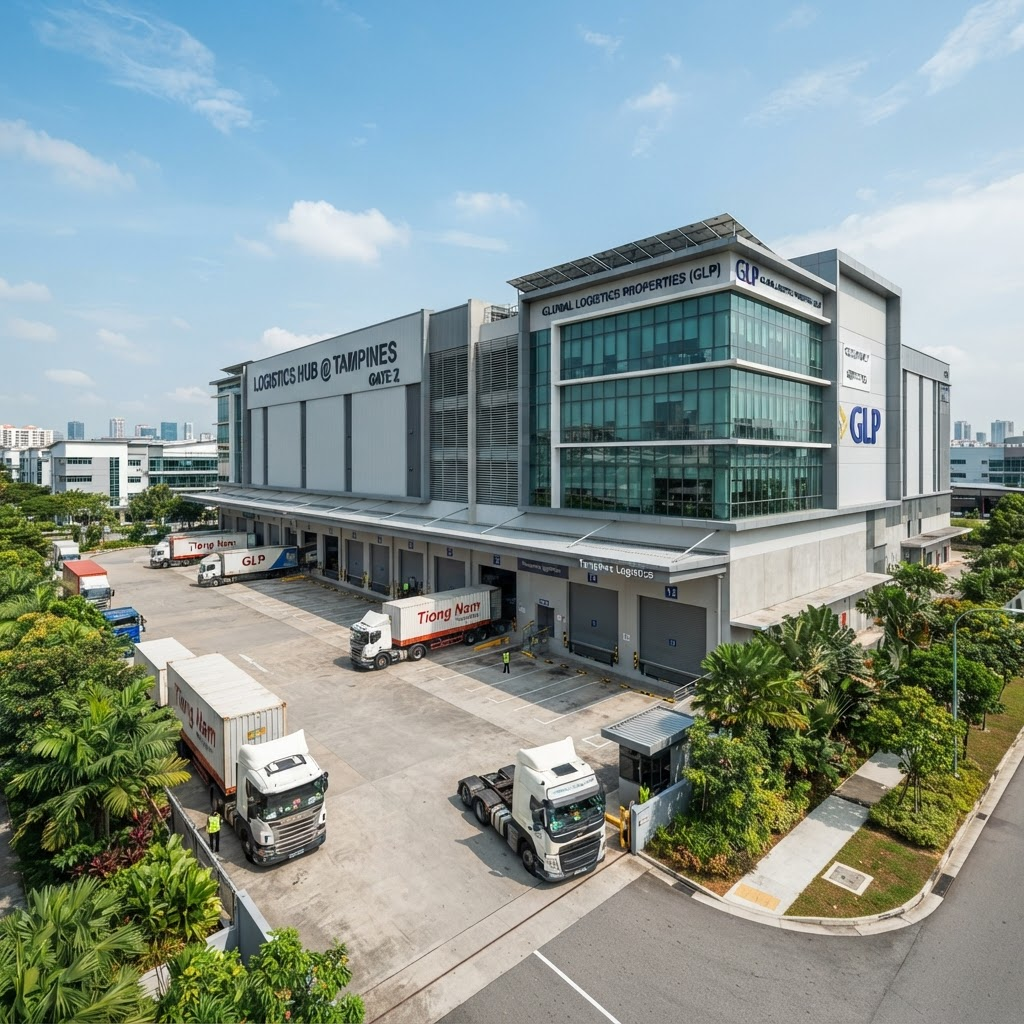

Modern industrial and logistics facility

Industrial and Logistics Properties

Industrial requirements often involve more than rental rate and floor area. Businesses may need to consider permitted use, floor loading, ceiling height, electrical capacity, loading access, cargo lifts, ventilation, water supply, drainage, vehicle circulation and technical fit-out requirements.

  • High-technology industrial space
  • Light-industrial units
  • Warehouses
  • Logistics facilities
  • Ramp-up factories
  • Stand-alone factories
  • Laboratories
  • Clean-room facilities
  • Production premises
  • Business-park space

Retail Properties

Retail-property selection depends on the intended concept, customer profile, visibility, frontage, footfall, access, surrounding tenant mix, approved use and operating restrictions.

We support requirements involving shopping-centre units, street-facing retail, food-and-beverage premises, service businesses and investor-owned retail assets.

Conserved heritage shophouses in Singapore

Shophouses

Singapore shophouses combine architectural character, limited supply and a range of commercial uses. Considerations may include conservation status, approved use, floor configuration, access, frontage, building condition, tenancy arrangements and renovation restrictions.

Tenant and Buyer Representation

Our property search and representation process may include:

  1. 1

    Requirement definition

    We establish the intended business use, location preferences, required floor area, budget, technical criteria and target occupation date.

  2. 2

    Market search

    Suitable properties are identified based on the approved requirement brief.

  3. 3

    Shortlisting and comparison

    Properties are compared using commercial and operational criteria rather than price alone.

  4. 4

    Viewings

    We coordinate property inspections and record relevant observations.

  5. 5

    Commercial negotiation

    We support discussions regarding rent, price, lease term, rent-free periods, fit-out arrangements, deposits, handover condition and other commercial matters.

  6. 6

    Due-diligence coordination

    Where appropriate, legal, valuation, tax, building, technical and financial professionals may be introduced.

  7. 7

    Completion support

    We coordinate documentation, handover and related service requirements.

Landlord and Seller Representation

For property owners, our role may include:

  • Preliminary property assessment
  • Market-positioning review
  • Asking-rent or asking-price discussion
  • Marketing strategy
  • Property-information preparation
  • Lead qualification
  • Viewing coordination
  • Offer comparison
  • Commercial negotiation
  • Transaction coordination
  • Regular activity reporting

Corporate Relocation and Property Search

Companies establishing or expanding operations in Singapore may require coordinated support across:

  • Company incorporation
  • Employment requirements
  • Office, industrial or retail premises
  • Insurance
  • Fit-out and renovation
  • Technology and telecommunications
  • Moving and logistics
  • Facility management
  • Ongoing corporate compliance

The Commercial Property and Business Setup teams can work together to align property decisions with the company's operational establishment.

Request a Commercial Property Consultation

Tell us whether you are looking to lease, buy, invest, sell or market a Singapore commercial property.

Property advisory services are provided by agents from PropNex Realty Pte Ltd, CEA Licence No. L3008022J. The identity and registration details of the appointed salesperson will be disclosed where appropriate.

Frequently Asked Questions

Your Questions, Answered

Can foreigners buy commercial property in Singapore?

Yes — and this is one of the most attractive features of the Singapore commercial market. Unlike residential property, where foreign buyers face a punishing Additional Buyer's Stamp Duty, most commercial property in Singapore can be purchased by foreigners and foreign entities without ABSD and without government approval. This applies to offices, retail units, industrial space and — importantly — shophouses that are zoned fully commercial. There are nuances to watch: shophouses with residential components upstairs may attract ABSD on the residential portion, industrial properties carry Seller's Stamp Duty if disposed of within three years, and certain leasehold industrial assets on JTC land impose eligibility and assignment conditions on buyers. Financing is available to foreign purchasers, though banks typically lend at somewhat lower loan-to-value ratios than for locals, commonly 60 to 70 percent for commercial assets. We guide foreign buyers through the full path — entity structuring, tax analysis, financing introductions, due diligence and completion — so ownership is structured correctly from the outset.

What is the difference between Grade A, Grade B and Grade C office space?

Office grading in Singapore is a market convention rather than an official classification, but the distinctions matter for cost and image. Grade A buildings are the newest and best-specified towers, typically in prime CBD locations such as Marina Bay and Raffles Place: large efficient floor plates, high ceilings, destination-control lifts, strong sustainability credentials and prestigious lobbies, commanding the highest rents. Premium Grade A — a subset — describes the very top tier of trophy towers. Grade B buildings are older or less centrally located, with smaller floor plates and simpler specifications, but they offer perfectly functional space at rents often 30 to 40 percent below Grade A, making them popular with cost-conscious professional firms. Grade C stock is older still, frequently strata-titled with fragmented ownership, and suits businesses prioritising budget over image. The right choice depends on your industry norms, client expectations, headcount density and budget. Many clients discover that a well-renovated Grade B floor delivers better value than a compact Grade A suite — an assessment we help make with current market rent data.

What does a typical office lease in Singapore look like?

A standard Singapore office lease runs two to three years, with larger occupiers negotiating five-year terms, often with an option to renew at market rent. Rent is quoted in dollars per square foot per month and is usually gross — inclusive of service charge, which covers air-conditioning during office hours, common-area maintenance and building management — though you should always confirm what is included. Expect a security deposit of three months' gross rent for established companies; landlords commonly ask newly incorporated or foreign entities for more, sometimes six months, which is negotiable. Rent-free fit-out periods of one to two months are customary for new leases, scaling with lease length and unit size. Tenants bear their own fit-out costs, utilities, and reinstatement — the obligation to return the premises to bare condition at lease end, a cost many first-time tenants underestimate. Stamp duty on the lease is payable to IRAS by the tenant. We negotiate each of these levers, because the difference between a market-standard and a well-negotiated lease compounds meaningfully over the term.

What are B1 and B2 industrial properties?

B1 and B2 are zoning categories under the URA Master Plan that determine what activities an industrial property may host. B1 zoning covers light industrial uses that are clean and compatible with surrounding residential areas — think software development with hardware assembly, food catering preparation, printing, research and development, and light manufacturing without nuisance emissions. B1 buildings are often modern ramp-up or flatted factories with office-like frontages. B2 zoning permits heavier industries that generate noise, fumes or vibration — metal fabrication, vehicle workshops, chemical processes — and such properties sit in designated industrial estates like Tuas, Jurong and Sungei Kadut, buffered from homes. Critically, industrial premises carry a 60-40 rule: at least 60 percent of floor area must be used for the approved industrial activity, with at most 40 percent for ancillary offices. Using industrial space as a pure office is a regulatory breach that JTC and URA actively enforce. We verify that your intended operations genuinely fit the zoning before you commit — a step that prevents expensive relocations later.

Why are conservation shophouses considered a special asset class?

Conservation shophouses combine scarcity, heritage and regulatory privilege in a way no other Singapore asset does. Roughly 6,500 shophouses are gazetted for conservation across districts such as Telok Ayer, Chinatown, Kampong Glam, Little India and Joo Chiat — and no more will ever be built, giving the asset class a fixed supply against growing demand. Many sit on freehold or 999-year tenure, rare in a market dominated by 99-year leaseholds. Commercially zoned shophouses can be bought by foreigners without ABSD, which has made them a favoured vehicle for family offices and international investors seeking tangible, controllable Singapore assets. Returns come from both rental income — ground-floor F&B and retail plus upper-floor offices or residences — and long-term capital appreciation, which has historically outpaced many property segments. Ownership carries obligations: conservation guidelines govern façade preservation, structural alterations and even signage, and renovation requires URA approval with specialist contractors. Pricing is opaque, with many transactions off-market. Our role spans sourcing — including unlisted opportunities — technical due diligence, tenure analysis and renovation feasibility, ensuring you understand exactly what stewardship of a heritage asset entails.

How much does office rent cost in Singapore right now?

Office rents vary widely by grade and district, so ranges are more useful than single figures. As a general orientation: Premium and Grade A CBD space typically commands roughly S$9 to S$14 per square foot per month, with the newest Marina Bay towers at the top of that band. Grade B CBD and quality city-fringe buildings generally range from about S$6 to S$8.50 psf. Decentralised offices and business parks — subject to eligible-use rules — can run from S$4 to S$6.50 psf, offering substantial savings for functions that do not require a CBD address. On top of headline rent, budget for the security deposit, stamp duty, fit-out (commonly S$70 to S$150 psf for a quality build-out), and monthly outgoings such as utilities and cleaning. Market conditions shift with supply cycles: new tower completions create windows of landlord flexibility, while tight vacancy strengthens their hand. Because asking rents and achievable rents often differ, we benchmark every negotiation against recent signed transactions in the same building or micro-market — data that is not publicly visible but materially affects what you should pay.

What hidden costs should I budget for when leasing commercial space?

The headline rent is only part of the true cost of occupation, and the ancillary items surprise many first-time tenants. Fit-out is usually the largest: constructing offices, meeting rooms, pantry and cabling typically costs S$70 to S$150 per square foot, before furniture and audio-visual equipment. Reinstatement at lease end — stripping the premises back to bare or original condition — commonly runs S$15 to S$30 psf and must be provisioned from day one. Stamp duty on the lease is payable to IRAS shortly after signing. During fit-out you may pay for hoarding, landlord plan-approval fees, and consultants' charges for M&E submissions. Ongoing, budget for utilities (air-conditioning outside standard hours is charged separately and can be significant), contents and public-liability insurance which leases mandate, cleaning, and in some buildings after-hours access charges. If you install a server room or supplementary cooling, expect additional landlord conditions. For retail, add point-of-sale infrastructure, grease-trap and exhaust requirements for F&B, and often a percentage-of-turnover rent component. We produce a full occupancy-cost model before you commit, so the total is never a surprise.

Should my business lease or buy its premises?

There is no universal answer — the right choice follows from your capital position, growth trajectory and market view. Leasing preserves cash for the operating business, keeps you flexible as headcount changes, and transfers building risk to the landlord; it suits new market entrants, fast-growing companies and businesses in evolving industries. Buying fixes your occupancy cost against future rent inflation, builds equity in an appreciating asset, allows customisation without landlord consent, and can strengthen your balance sheet; it suits established operations with stable space needs and available capital. The financial comparison should be run honestly: ownership carries stamp duty (up to 5 percent Buyer's Stamp Duty on commercial), financing costs at commercial rates, maintenance, property tax on owner-occupied premises, and the opportunity cost of the equity deployed. Against that, owner-occupiers in strata offices and B1 industrial units have historically enjoyed meaningful capital appreciation, and GST-registered companies can typically recover the GST on a commercial purchase. We build a lease-versus-buy model over your realistic horizon — usually seven to ten years — so the decision rests on evidence.

How do you shortlist properties for clients?

Our shortlisting philosophy is curation over volume — presenting six well-reasoned options beats forwarding sixty listings. The process starts with a structured brief: intended use and any licensing implications, headcount and growth projections translated into square footage, location anchors such as client proximity, talent catchment and MRT access, technical needs like floor loading, power provision or ceiling height, budget across rent and fit-out, and timing. We then search comprehensively — public listings, our landlord relationships, and off-market opportunities that never reach portals, which matter especially for shophouses and full floors. Every candidate is verified before you see it: we confirm zoning and approved use against your activities, check genuine availability and asking terms, and note building-specific issues such as pending en-bloc situations, chronic lift problems or upcoming façade works that listings never mention. What you receive is a comparison matrix with honest commentary — including reasons to reject options — followed by organised viewings of the strongest candidates. Clients consistently tell us the disciplined shortlist saved them weeks of unproductive viewing time.

What is the buying process for commercial property in Singapore?

A commercial purchase follows a well-defined sequence. After price and key terms are agreed — often through a letter of intent — the seller grants an Option to Purchase in exchange for an option fee, typically 1 percent of price, giving you an exclusivity window of around 14 days. During this window your lawyer conducts title searches and you finalise financing; exercising the option requires paying a further deposit, usually 4 to 9 percent, bringing the total to 5 or 10 percent. Buyer's Stamp Duty — up to 5 percent on commercial property — is payable within 14 days of exercise. Completion normally follows 8 to 12 weeks after exercise, during which legal due diligence concludes: verifying encumbrances, tenancy agreements if sold with tenants, outstanding property tax and, for strata units, management-corporation matters. GST applies to most commercial sales by GST-registered sellers, which registered buyers can typically claim back — a cash-flow consideration we plan around. If purchasing through a new entity, incorporation must precede the option exercise. We coordinate lawyers, bankers, valuers and tax advisers so each step lands in the correct order.

What stamp duties and taxes apply to commercial property?

The tax picture for commercial property is materially friendlier than residential, but several items must be planned for. On purchase, Buyer's Stamp Duty applies on a tiered scale reaching 5 percent for the value above S$1.5 million — and, crucially, no Additional Buyer's Stamp Duty applies to fully commercial property regardless of nationality or entity type. Industrial properties uniquely attract Seller's Stamp Duty of 15, 10 or 5 percent if sold within one, two or three years respectively, penalising short flips; offices, retail and commercial shophouses carry no SSD. Leases attract stamp duty payable by the tenant, calculated on the average annual rent. Annually, property tax of 10 percent of Annual Value applies to commercial premises. GST — currently 9 percent — applies to commercial sales and rents by GST-registered parties, recoverable by registered buyers and tenants. Rental income is taxable, but interest, maintenance and other expenses are generally deductible; Singapore levies no capital gains tax, although gains from trading property as a business can be taxed as income. We coordinate tax advice within every transaction so the structure is efficient before you sign anything.

Can you help me negotiate better lease terms with landlords?

Negotiation is where representation earns its keep, because landlords negotiate leases every week while most tenants do so once every few years. The levers extend far beyond headline rent. We negotiate rent-free periods for fit-out and sometimes additional free months spread across the term; security deposits, where newly incorporated entities are routinely asked for six months but can often settle at three with the right framing; renewal options with rent caps or defined review mechanisms rather than open 'market rent' clauses; expansion rights and rights of first refusal on adjacent space; early-termination or sublet flexibility that protects you if plans change; capped service-charge escalations; and reinstatement scope, which can be narrowed significantly if agreed upfront. Landlord incentives such as fit-out contributions appear in softer markets and for longer commitments. Our advantage is information: we know what landlords have recently accepted in the same building and where their vacancy pressure sits. The savings from a properly negotiated lease typically amount to several months' rent over the term — far exceeding any cost of engaging us.

What should I check before signing for retail or F&B premises?

Retail and F&B premises carry a layer of technical and regulatory requirements beyond ordinary commercial space, and discovering a gap after signing can be fatal to the business plan. First, approved use: the unit must be approved for your specific activity — a shop approval does not automatically permit a restaurant, and converting use requires URA change-of-use approval that is not guaranteed. For F&B, verify the physical essentials: exhaust ducting to an approved discharge point (many shophouse and mall units lack riser capacity), grease trap provision, adequate electrical loading for kitchen equipment, gas supply, and floor drainage. SFA licensing for food establishments has premises-design requirements that must be built into your fit-out. Check the mall or landlord's operating rules: mandated trading hours, percentage-of-turnover rent reporting, exclusivity granted to competing tenants that could restrict your menu, and renovation windows. Understand footfall honestly — walk the location at different hours and days before committing. Finally, confirm signage rights, outdoor-seating approvals if relevant, and loading-bay access for deliveries. We run this complete checklist as standard before any retail client signs.

How long does it take to secure commercial premises?

Realistic timelines depend on the asset type and whether you are leasing or buying. A conventional office lease moves fastest: one to two weeks to shortlist and view, one to two weeks to negotiate the letter of intent, then two to four weeks for the tenancy agreement, landlord approvals and stamp duty — call it four to eight weeks from brief to keys, before fit-out. Industrial leases add verification steps — JTC consent where applicable, permitted-use confirmation, sometimes NEA or SCDF input — pushing typical timelines to eight to twelve weeks. Retail units in managed malls involve landlord vetting of your concept and can take similar or longer. Purchases run on the legal cycle: from accepted offer, expect roughly two weeks of option period plus eight to twelve weeks to completion, with bank valuation and loan approval as the pacing items. Fit-out then adds four to twelve weeks depending on complexity. Compressed timelines are achievable — we have completed urgent leases in a fortnight — but speed narrows negotiating room, so we always advise starting the search three to six months before you need to occupy.

Do you also represent landlords and sellers?

Yes — we act for owners as well as occupiers, and the two practices reinforce each other: representing landlords keeps our tenant-side advice grounded in how owners actually think, and vice versa. For landlords leasing space, we advise on realistic pricing against current transaction evidence rather than optimistic asking rents that prolong vacancy, position and market the premises through our occupier network and public channels, pre-qualify prospective tenants on covenant strength and use compatibility, and negotiate terms that protect your interests on deposits, fit-out obligations and reinstatement. For owners selling, we advise on timing and pricing strategy, prepare the asset — including resolving title, tenancy and approval issues that commonly derail transactions late — run discreet off-market processes where confidentiality matters, and manage negotiations through to completion. Where we hold both landlord and tenant relationships, we disclose our position transparently and never act for both sides of the same negotiation without informed consent. Owner clients also frequently engage our property-management arm after leasing, keeping accountability for the asset's performance in one place.

Speak With a Commercial Property Advisor

Our advisors respond Monday to Saturday, 9:00am–7:00pm SGT.

WhatsApp